
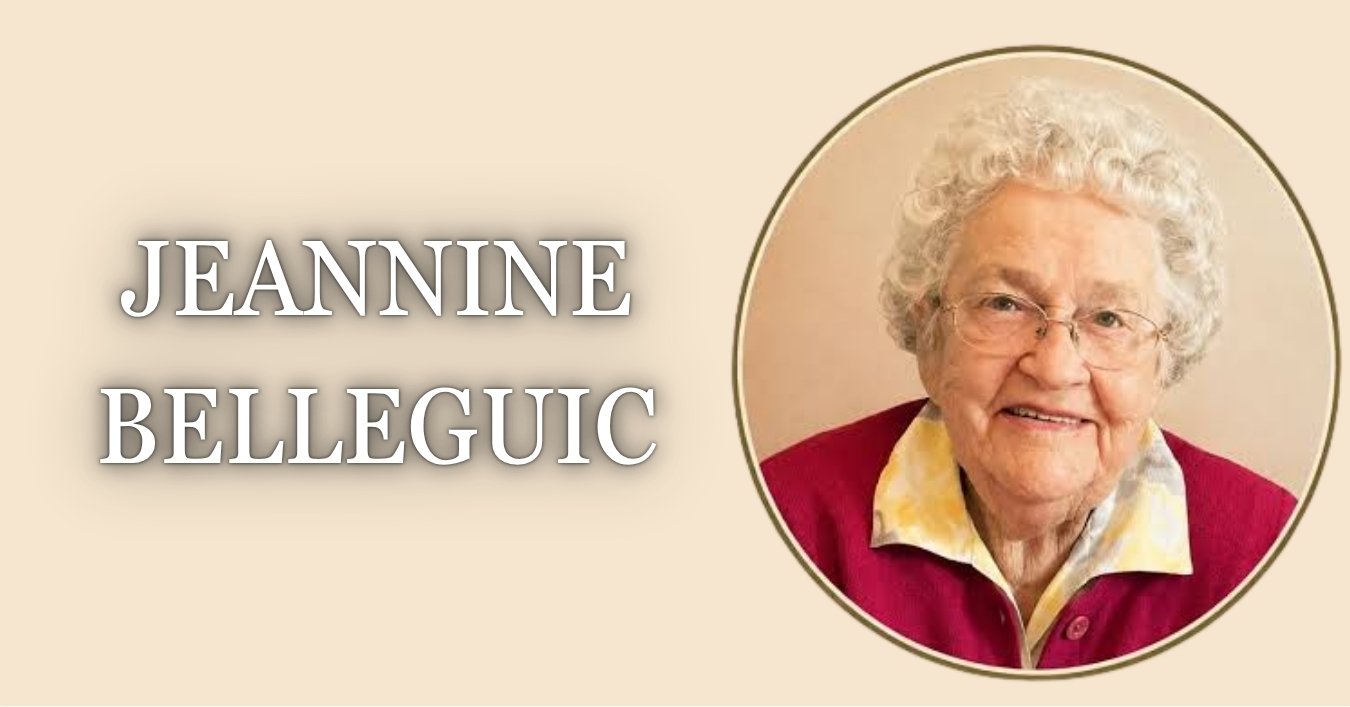
Jeannine Belleguic’s name spread online only after a short French death notice got picked up and indexed, not because of any career, wealth, or public role. This piece lays out the actual verified record, her birth name, her decades in Quimperlé, her marriage, her death in Lorient in April 2025, and the honest reason her online profile looks thin next to a typical celebrity page. You’ll also see exactly how she gets confused with a different woman who shares part of her name, and why France’s civil records system, not fame, put her name in front of you. By the end, you’ll know precisely what’s documented and what genuinely isn’t.
Short Answer
Jeannine Belleguic, born Jeannine Bleuzen on May 28, 1931, in Quimperlé, France, was a private Breton woman who died in Lorient on April 18, 2025, at age 93. She married Jean-Charles Belleguic, a paper-industry financial director, and is survived by three children and several grandchildren.
The Basic Record Behind the Name
Public French death and family notices identify her formally as Jeannine Belléguic, née Bleuzen, though her full birth record lists three additional given names, Jeannine Josephine Annick Bleuzen. She was born in Quimperlé, a town in the Finistère department of Brittany, on May 28, 1931. Nothing in the public record describes her schooling, her occupation before marriage, or any career of her own. That absence isn’t a gap in reporting, it reflects how ordinary a life she led by the standards of what usually gets written down.
After marrying into the Belleguic family, she carried that surname for the rest of her life, and it’s the version most search engines and directories now show. The accented form, Belléguic, appears in the original family announcement, while the version without the accent circulates more widely online. Both point to the same woman once the birth name, the age, and the 2025 date line up.
A Financial Director’s Wife in a Breton Paper Town
She married Jean-Charles Belleguic, who was born on March 31, 1924, also in Quimperlé. He was the son of Yves Belleguic and Yvonne Colliec, a couple whose own roots stayed in the same town across generations. Jean-Charles worked as financial director at Papeteries de Mauduit, a paper manufacturer that grew into a genuine industrial presence in the region and later became part of what’s known today as Mauduit International, a company still active in the tissue paper sector. He died on June 24, 1979, at 55, leaving Jeannine a widow for the final decades of her long life.
Family notices describe three children, six named grandchildren, and ten great-grandchildren surviving her. No source documents a profession or public role of her own beyond wife and mother, and none of the available records list any business she ran or award she received. That’s a common pattern for women of her generation in provincial France, where a life could be full and locally significant without ever producing a paper trail beyond church registers and family archives.
Her Death in Lorient and the Notice That Followed
Jeannine Belleguic died in Lorient on April 18, 2025, at the age of 93. Working out that span, a woman born in 1931 who died in 2025, is exactly the kind of quick subtraction an online age calculator handles instantly instead of leaving you to count decades by hand. Her funeral was held roughly a week later at Église Notre-Dame de Quimperlé, the same town where she was born nearly a century earlier.
The notice ran through Ouest-France, the regional newspaper that publishes death announcements across Brittany as a matter of routine local coverage, not celebrity reporting. That single published notice, once it got indexed by search engines and then scraped by memorial aggregator sites, is the entire reason her name now returns dozens of results. There was no scandal, no achievement, and no viral moment behind it, just an ordinary regional obituary doing what obituaries in France have always done.
The Mix-Up That Explains Half the Confusion Online
Several of the pages already ranking for this name flag, correctly, that a second and unrelated woman shares part of it. That woman is Jeannine Wisnosky Stehlin, connected to a fundraising page in Culver City, California, and she has no documented family or geographic link to the Bleuzen or Belleguic families in Brittany. Anyone researching “Jeannine Belleguic” and stumbling onto American fundraising or memorial content has crossed into the wrong record entirely.
Part of the confusion traces to a genuinely technical source most competing articles skip over. France’s central death register, the Fichier des personnes décédées, has been maintained by INSEE, the national statistics agency, since 1970 and has been freely searchable online without registration since October 2019. According to the register’s own documentation, its text fields store only capital letters with no diacritics, which is precisely why “Belleguic” circulates online stripped of the accent that appears in the family’s own funeral notice. That’s not a search engine glitch, it’s a structural feature of the database genealogy sites and content aggregators pull from.
Why an Ordinary Notice Reads Like a Celebrity Profile
Look closely at the sites already covering this name and a pattern shows up fast. They use headings like “Verified Record Snapshot” and ask FAQ questions about net worth for a woman who left no business, no public salary, and no estate anyone has documented. That format wasn’t built for Jeannine Belleguic specifically, it’s a template applied to any name that starts generating search volume, regardless of whether the person behind it was ever a public figure.
This site covered a similar case recently with the story of Kumud Rane, a private woman whose name only entered wide search traffic after her death drew attention through a public figure’s grief. The mechanism repeats, an ordinary person’s obituary gets indexed, aggregator sites notice the traffic, and within weeks a private life gets dressed up in language borrowed from entertainment journalism. Recognizing that pattern matters more than any single fact about Jeannine Belleguic herself, because it explains why a name search can feel like it’s uncovering a celebrity when it’s really surfacing a routine civil record.
What the Record Actually Supports
Strip away the speculative framing and the confirmed facts are modest but clear. She was born Jeannine Bleuzen in 1931, married into a respected but not famous Quimperlé family, raised three children through a widowhood that began in 1979, and died at 93 in April 2025. Nothing in any credible source suggests wealth, controversy, or public achievement, and treating the absence of those things as mysterious misreads what a quiet, well-documented family life actually looks like on paper.
Conclusion
The most useful thing to take from her story is knowing where a name search stops being informative and starts being manufactured content dressed up as biography. If you’re checking a name like this, look for a primary source, a newspaper notice, a civil register, a genealogy entry, before trusting a page that reads like a celebrity teardown built from nothing. That habit will serve you on the next obscure name search a lot more than any single fact about Jeannine Belleguic will.
FAQ
Who was Jeannine Belleguic?
She was a private French woman born Jeannine Bleuzen in Quimperlé, Brittany, in 1931. She married into the Belleguic family and lived a family-centered life with no documented public career.
What was Jeannine Belleguic’s maiden name?
Her birth surname was Bleuzen, recorded formally as Jeannine Josephine Annick Bleuzen. French death and family notices list her as “Belléguic, née Bleuzen” to preserve both names.
When and where did Jeannine Belleguic die?
She died in Lorient, France, on April 18, 2025, at age 93. Her funeral followed about a week later at Église Notre-Dame de Quimperlé.
Is Jeannine Belleguic the same person as Jeannine Wisnosky Stehlin?
No Jeannine Wisnosky Stehlin is connected to a separate fundraising page in Culver City, California, with no documented link to the Breton Bleuzen or Belleguic families.
Why does a private person’s name show up in so many search results?
Once a regional obituary gets indexed by search engines, aggregator and content sites scrape it and republish it in templated “profile” formats, which is exactly what happened here with no fame or public role involved.