
Fingers Crossed Meaning and Where the Gesture Backfires
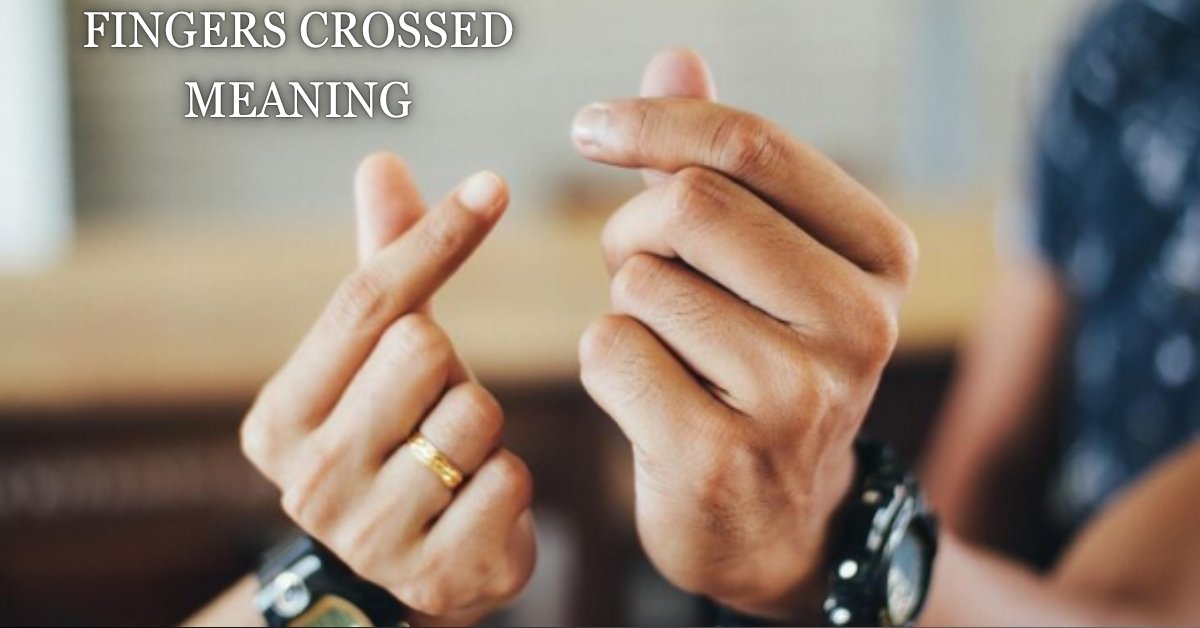
You’ll leave this page knowing what people intend when they say they’ve got their fingers crossed and where the habit came from, plus the real trouble it can cause abroad. The short version of the fingers crossed meaning is hope for a good outcome that isn’t in your hands. The longer version involves two competing origin stories, a famous psychology experiment that didn’t hold up, and countries where the same hand shape says something far less friendly. Read on and you’ll be able to use the phrase naturally and retell its history, with a clear sense of when to keep your hands flat. The Short Answer Fingers crossed means you’re hoping something turns out well and can’t control the result. People literally cross the index and middle fingers, or just say the words, to wish for luck for themselves or someone else. In some countries the same gesture signals a lie or an insult. The Fingers Crossed Meaning in Everyday Speech Say you’ve got your fingers crossed and you’re admitting two things at once. You want a particular result, and you know effort alone won’t deliver it. That second half explains why the phrase turns up before job interviews, medical results, flight delays and lottery draws, and almost never before things you fully control. Stakes can be tiny or heavy, and the tone shifts with them. Hoping the rain holds off for a picnic sounds light, while keeping your fingers crossed that a relative recovers carries real weight, which is why a softer voice often goes along with it. It works in both directions, since you can promise to keep yours crossed for a friend or ask them to keep theirs crossed for you. The grammar is forgiving, since fingers crossed can introduce a full clause (fingers crossed that the bus is on time) or attach to a noun (fingers crossed for good news), and it works as a complete reply on its own. You’ll also hear it stretched to fingers and toes crossed when someone wants to sound extra hopeful. A few lines like these show how it sounds in daily speech. Where the Gesture Came From Nobody can pin down the birth of crossed fingers, and anyone who names a single inventor is guessing. The written idiom came much later than the gesture, with dictionaries placing its recorded use in the early 1900s. The documented history of the gesture shows it gaining traction in sixteenth-century England, where people crossed their fingers to ward off evil and ill health. Theory One, a Wish Shared by Two People The older story is pre-Christian and starts with two people rather than one. In this version, a pair of people crossed their index fingers to form a cross that stood for perfect unity. The crossing point was thought to gather good spirits and hold a wish in place until it could come true. Over time people realized they could do it alone, first with two index fingers and later with the one-handed version we still use. Theory Two, a Quiet Sign Among Persecuted Christians Early Christians were persecuted and needed quiet ways to recognize one another, and that’s where the second story begins. One version has them forming the ichthys fish symbol by touching thumbs and crossing index fingers, while another says a tiny cross made with the fingers could protect a believer from evil and be made in secret. Historical accounts add that the gesture was often paired with a spoken blessing asking for God’s company. Neither version fully explains how luck got attached. The fish story in particular says little about wishing, though it fits a gesture that once asked for a blessing rather than predicted a win. The honest answer about which one is right is that nobody knows, because gestures leave little written trace, and folk habits usually pick up meaning from several directions at once. Same Hand Shape, Different Message Abroad Travelers tend to assume crossed fingers translate everywhere, and that assumption is where the trouble starts. Several regions read the same hand shape differently. The list below shows how far the meaning shifts. Children use the same shape for a different purpose, crossing fingers behind the back while telling a white lie, on the belief that it excuses the fib. The practical rule is easy enough. Say the words in English if you like, but skip the hands abroad unless you know the local meaning. What the Famous Fingers Crossed Study Actually Showed A popular claim says psychology has proven that crossing your fingers improves performance. The confusion starts with a 2010 paper from the University of Cologne titled Keep Your Fingers Crossed! How Superstition Improves Performance, whose abstract lists keeping one’s fingers crossed among the good-luck actions that boosted results on golf, dexterity, memory and anagram tasks. Headlines and listicles did the rest. The best-known number comes from a golf task, and that task involved a lucky ball, not crossed fingers. Participants told their ball had been lucky sank 65% of ten short putts, against 48% for controls. The finger-style ritual appeared in a separate dexterity task, where the experimenter told some participants “I press the thumbs for you,” the German equivalent of wishing luck. Later work has shaken that result. Two high-powered replications of the golf experiment found that participants told they had a lucky ball performed almost identically to controls, and a meta-analysis found no effect among the studies with the strongest designs. That doesn’t disprove every task in the original paper, but it means nobody can treat the paper as proof that the ritual works. The correct reading is more modest. Crossed fingers are a free social ritual that may steady a nervous person, and the original authors pointed to a rise in confidence as the mechanism, not any supernatural nudge. That matters if you’re tempted to lean on the gesture instead of preparing, because the wish can support your effort but won’t replace it. Texting, Emailing and the Crossed Fingers … Read more