Admin - Numberble - Page 5 of 7

Gurus WaveTechGlobal: Five Sites, Five Different Answers

gurus wavetechglobal

Search “gurus wavetechglobal” and you’ll land on ten articles that can’t agree on what the term even means. One calls it a cybersecurity company. Another describes a “guru community” built around personal transformation. A third treats it as a generic phrase for tech thought leaders. This piece sorts through what’s actually documented about WaveTechGlobal.com, why the coverage contradicts itself so badly, and what that contradiction tells you about how this specific corner of the internet gets built. By the end, you’ll know exactly what’s verifiable, what isn’t, and how to spot this same pattern the next time it shows up somewhere else. Quick Answer “Gurus WaveTechGlobal” isn’t a documented company, person, or program. It’s a search phrase that dozens of near-identical AI-written articles have latched onto, each describing a different, unverifiable version of what it supposedly is, with no independent source confirming any of them. What “Gurus WaveTechGlobal” Actually Refers To The phrase traces back to WaveTechGlobal.com, a real website whose own About page describes itself as a technology destination covering gadgets, mobile devices, gaming, and smart-home news. That page names Dorian Stewart as founder and Ivan Pecotic as an editor focused on device reviews. That’s the only first-party information available, and it’s worth being precise about what it is: a claim the site makes about itself, not something a third party has confirmed. Everything past that point gets murky fast. Dozens of articles across unrelated domains use the exact phrase “gurus wavetechglobal” or close variants like “wavetechglobal gurus” and “tech guru wavetechglobal,” and almost none of them cite the About page or agree with each other on basic facts. The Five Contradictory Stories Sitting on Page One Pull up the current results and read past the headlines. The disagreement isn’t stylistic, it’s factual, and it shows up in specific, checkable ways: Five sources, five different companies, in five different industries, run by different people. Real organizations don’t generate this kind of internal contradiction across their own coverage. Content built to rank for a phrase, without much concern for accuracy, does. Who’s Actually Behind the Site Independent verification here is thin, which is itself part of the story. WaveTechGlobal.com is registered through a privacy-shielding registration service, meaning the domain owner’s identity isn’t publicly listed, a detail that scam-checking tools consistently flag as lowering a site’s trust score, not because it proves wrongdoing but because it removes a basic accountability signal. Site-reputation scanners covering the wavetechglobal.net variant found a low Tranco traffic rank and other suspicious domains hosted on the same server, which pushed its automated trust rating down further. None of that confirms a scam. It confirms that almost nothing about “gurus wavetechglobal” can be checked against an outside source, which is a meaningfully different and more useful answer than either “it’s legit” or “it’s a scam.” The Assumption That Trips Up Most Searchers Most people searching this term assume that because ten articles cover it, ten independent sources must have looked into it and found something real. That assumption is exactly backward here. A high volume of coverage on a niche phrase usually means the opposite of consensus, it means one or two seed articles got copied, reworded, and republished across many low-authority domains until the phrase looked established. The confusion happens because search results don’t show provenance. A reader sees ten different URLs and reads that as ten different investigations, when it’s often the same thin claim passed through a rewriting process ten times. Once you know to check whether the “facts” actually agree with each other, the pattern becomes obvious within about two clicks. This is close to what happened with Glorvix.com, a site that similarly markets itself under two conflicting identities without much to independently verify either one. The tell is the same: confident claims, no outside confirmation, and details that shift depending on which page you land on. How to Spot This Pattern on Any Keyword If you run into a term like this again, a few checks take under five minutes and settle most of the question: This pattern has a name in the SEO world: content farming, the practice of mass-producing low-cost articles targeted at search phrases rather than at genuine reader demand. “Gurus wavetechglobal” fits the profile closely enough that treating every claim about it as unconfirmed is the safer default until someone produces real documentation. If you’ve run into a similarly ambiguous site before and wanted a structured way to check it, a comparable breakdown of a net-worth blog with unclear ownership walks through the same verification process on a different kind of site. Conclusion The honest answer to “what is gurus wavetechglobal” is that nobody outside a cluster of SEO-driven articles has actually confirmed it. Treat any specific claim, a title, a founder, a service, as unverified until you find it on a source that isn’t part of that same content cluster. If you’re evaluating a similar phrase somewhere else, run it through the same five checks above before taking any article’s word for it. FAQ Is WaveTechGlobal a legitimate company? There’s no documented evidence it’s a financial scam, but ownership is shielded and most claims about it can’t be independently verified, so “unconfirmed” is more accurate than either legitimate or fraudulent. Who owns WaveTechGlobal.com? The site’s own About page names Dorian Stewart as founder and Ivan Pecotic as an editor, but domain registration is privacy-shielded, so this can’t be confirmed by a third party. Why do articles about gurus wavetechglobal contradict each other? Most appear to be part of a content-farming cluster, articles produced at scale to rank for a phrase, which explains why details like industry, leadership, and services shift from one source to the next. Is wavetechglobal.net the same as wavetechglobal.com? No reputation scanners have flagged wavetechglobal.net separately as having a low trust score and suspicious server neighbors, so the .net and .com domains should be checked independently rather than assumed to be the same operation. How can I tell if a tech company’s website is … Read more


Janet Condra Wasn’t an Actress, Here’s Who She Really Was

janet condra

Janet Condra is the woman Larry Bird married at nineteen, divorced within a year, and later had a daughter with despite the split. She grew up beside Bird in French Lick, Indiana, and their brief marriage produced his only biological child, Corrie Bird. This piece separates the documented facts, marriage dates, the custody years, and her life since, from the fabricated details, wrong job titles and invented net worth figures, that have spread across low quality search results. By the end, you’ll know exactly what’s real about Janet Condra and what isn’t. The Short Answer Janet Condra was Larry Bird’s high school girlfriend and first wife. They married on November 8, 1975, divorced about a year later, and had a daughter, Corrie Bird, born August 14, 1977. Janet has lived privately in Indiana ever since, largely out of the public eye. Who Is Janet Condra, Exactly? Janet Condra grew up in the Springs Valley area of southern Indiana, the same small region that raised Larry Bird. The two attended Springs Valley High School together in the early 1970s, back when Bird was still an unranked teenager rather than a future MVP. Their relationship formed out of shared geography and a small dating pool, not fame, since nobody in French Lick was thinking about the NBA yet. That ordinary beginning is part of why so little was documented about Janet at the time. Nobody was writing down details about a high school couple in a town of a few thousand people, which is exactly why so much of what circulates about her now is guesswork dressed up as biography. The Marriage, the Divorce, and What Actually Happened Janet Condra and Larry Bird married on November 8, 1975, shortly after Bird had briefly enrolled at Indiana University and returned home to French Lick. He was nineteen. The marriage lasted less than a year, and the couple divorced on October 31, 1976, according to Bird’s own biographical record on Wikipedia, which confirms the marriage date and the fact that the two divorced within a year. Bird’s basketball trajectory during this period was chaotic. He had walked away from Indiana University once already, was working a city job back home, and had not yet found his footing at Indiana State, all of which put real strain on a marriage between two teenagers. None of the public record explains the specific reasons for the breakup in Janet’s own words, and she has never laid them out in detail publicly, so any article claiming to know her private reasoning is filling in blanks that were never actually confirmed. Yardbarker Corrie Bird’s Birth and the Complicated Years After The divorce didn’t end the relationship completely. Bird and Condra reconciled briefly afterward, and that reconciliation led to a daughter, Corrie Bird, born August 14, 1977, in Brazil, Indiana. Bird initially denied paternity, a detail that shows up consistently across independent reporting and isn’t disputed anywhere. A court ordered paternity test eventually confirmed he was Corrie’s father. Even after that confirmation, Bird stayed distant from Corrie for most of her childhood, a gap he has since spoken about with visible regret in later interviews, admitting he never developed a real relationship with her during those early years. Janet raised Corrie largely as a single parent through that stretch, which is the part of this story that gets the least attention despite being the most consequential. Life After Larry Bird Janet Condra remarried at some point after the divorce, and her second husband, identified in several biographical accounts as Mr. Hargrave, helped raise Corrie alongside her. Reporting describes Janet’s later career in modest, working class terms rather than anything glamorous, with one account referencing work as a mail carrier. She hasn’t built any public identity around her connection to Bird, and there’s no evidence she has ever sought media attention or compensation tied to his fame. The clearest documented instance of Janet speaking publicly came in a 1998 interview with Sports Illustrated, where she discussed the strained relationship between Bird and Corrie candidly. Outside of that one moment, she has stayed almost entirely silent on the record, which is worth noting because several sites claim she has “never spoken to media” at all, a claim that isn’t accurate. A similar pattern of a private person suddenly pulled into search traffic through a famous connection played out recently with Kumud Rane, a woman who spent decades out of the spotlight before a single public moment made her name searchable overnight. Janet’s situation stretched out over decades instead of a single event, but the underlying dynamic, a private life being reconstructed from scraps by strangers online, is the same. The Janet Condra Myth: Where Most Articles Get It Wrong Type “Janet Condra” into a search engine and you’ll eventually run into a claim that she’s an American actress with a net worth of roughly $500,000. Neither detail holds up. There’s no film, television, or stage credit anywhere tied to a Janet Condra connected to Larry Bird, and no financial disclosure, court record, or credible report establishes a net worth figure for her at all. This kind of claim usually comes from automated content farms that pattern match “name plus net worth” templates onto any person with public search demand, regardless of whether the underlying facts exist. It’s a real problem specific to this keyword, since Janet Condra sits at the intersection of two things search engines love, a celebrity connection and a name with almost no verified biography, which makes her an easy target for invented detail. The same pattern shows up with the claim that she became a “community volunteer and Sieda Service Award recipient.” That detail appears to come from confusing Janet Condra with an entirely different person who happens to share her first name in an unrelated local news archive. Readers deserve to know the difference between what’s documented and what’s been stitched together from name collisions, and that distinction is exactly what most competing articles on this … Read more

Jay Cinco Age Confirmed by His Netflix Cast Card

Jay Cinco Age

Jay Cinco Age is 24 years old, though a quick search for the exact Jay Cinco age still turns up a stubborn split between 23 and 24 depending on which site you land on. That confusion isn’t random. It traces back to two different birth years that have circulated since he first went viral, and most biography sites simply repeated whichever one they found first. This piece settles it using a source none of the celebrity bio pages have actually checked: Netflix’s own cast records from his reality TV debut. By the end, you’ll know his real birth date, why the wrong year kept spreading, and exactly how old he turns on his next birthday. Short Answer Jay Cinco Age was born on December 14, 2001, in Watts, California, making him 24 years old as of September 2026. He turns 25 on December 14, 2026. Netflix’s official cast page for Inside: USA lists him as 23 in September 2025, which only fits the 2001 birth year. Where the 2001 vs. 2002 Mix-Up Actually Comes From Most of the bio sites covering Jay Cinco pulled his birth year from early fan-run pages, and a lot of those settled on December 14, 2002 sometime around 2023. That year stuck, got copied from one article to the next, and it’s still the version a lot of newer posts publish even now. The problem shows up the moment you check it against anything with an actual publication date attached to it. Here’s the detail almost every bio page missed. When Netflix’s Inside: USA premiered on September 21, 2025, the show’s own cast breakdown listed him plainly as “Jay Cinco, 23: Rapper.” A production this size doesn’t guess a contestant’s age for a cast card, it comes from paperwork the contestant themselves signs off on. Run that number backward and it only works if he was born on December 14, 2001, since a 2002 birth date wouldn’t have put him at 23 until that December, months after the show had already aired. So the math points cleanly to 2001. Sites that still list 2002 are working from an older, uncorrected source, and it happens more often than you’d think with rising public figures. It’s the same kind of gap that came up after Kumud Rane’s death, when her actual age turned out to hinge on which calendar system her birth records used, a detail most obituary coverage glossed right over. You’ll also see his full name spelled two different ways online. Most independent profiles list it as Justin Fel Parker, while a couple of smaller pages just use Justin Cinco. Fel Parker is the version that shows up across the larger number of separately sourced write-ups, so it’s the one worth trusting until Jay confirms it himself. The Quick Facts From Watts to a Netflix Reality Show Jay Cinco Age spent his early childhood in Watts before his family relocated to Compton when he was around eleven. Both neighborhoods carry heavy histories with gang activity, and Cinco has spoken openly about losing his cousin Keith to gang violence when he was a kid. Music became the outlet that kept him out of that life, and it shows up directly in his lyrics. He built his following as an independent artist, releasing tracks like “Neva Fold,” “Hood Confessions,” and “Ghetto Angels” without label backing. Alongside the music, he runs a YouTube channel where he mixes prank videos, vlogs, and gaming streams with his songs, which is a big part of why his audience skews younger and more online than a typical rap fan base. His biggest mainstream moment so far came outside music entirely. He joined the cast of Netflix’s Inside: USA, a reality competition from the British YouTube group the Sidemen, which premiered on September 21, 2025. Twelve creators lived together for a shot at a million-dollar prize, with every purchase draining the pot. Netflix’s own cast profile for the show is what pins down his real age, and it’s a detail almost none of the bio-style articles covering him have actually gone back to check. How to Check a Real Jay Cinco Age Like This Yourself Any time a public figure’s age gets disputed, the fastest way to settle it is the same method used above: find the most recent date-stamped, verifiable source and count forward from there rather than trusting whichever number ranks first on Google. If you want to run that same date math on your own birthday, or figure out someone else’s exact age down to the day, a free age calculator handles the arithmetic instantly instead of counting years and months by hand. What’s Next for Jay Cinco Age Jay Cinco Age turns 25 on December 14, 2026, just a few months from now. His music output has stayed steady since his first singles dropped, and the Netflix appearance introduced him to a much wider audience than his streaming numbers alone ever would have. Whether that translates into more television work or stays focused on music remains to be seen, but at 24 he’s still early enough in his career for either path to be realistic. Conclusion The number that matters is 24, backed by a December 14, 2001 birth date that Netflix’s own production records confirm. Most confusion online traces back to an older, uncorrected 2002 date that keeps getting copied forward without anyone checking it against anything current. If you’re citing his age going forward, use 24 now, and remember it becomes 25 on December 14, 2026. FAQ What is Jay Cinco Age real name? Most independently sourced profiles list his birth name as Justin Fel Parker. A smaller number of pages shorten it to Jay Cinco Age, but Fel Parker is the more widely corroborated version. Is Jay Cinco Age signed to a record label? No hee has built his entire catalog as an independent artist, handling his own releases without a major label deal, which is part of why his output has stayed consistent even … Read more

Jeannine Belleguic Never Left Quimperlé in 93 Years

jeannine belleguic

Jeannine Belleguic’s name spread online only after a short French death notice got picked up and indexed, not because of any career, wealth, or public role. This piece lays out the actual verified record, her birth name, her decades in Quimperlé, her marriage, her death in Lorient in April 2025, and the honest reason her online profile looks thin next to a typical celebrity page. You’ll also see exactly how she gets confused with a different woman who shares part of her name, and why France’s civil records system, not fame, put her name in front of you. By the end, you’ll know precisely what’s documented and what genuinely isn’t. Short Answer Jeannine Belleguic, born Jeannine Bleuzen on May 28, 1931, in Quimperlé, France, was a private Breton woman who died in Lorient on April 18, 2025, at age 93. She married Jean-Charles Belleguic, a paper-industry financial director, and is survived by three children and several grandchildren. The Basic Record Behind the Name Public French death and family notices identify her formally as Jeannine Belléguic, née Bleuzen, though her full birth record lists three additional given names, Jeannine Josephine Annick Bleuzen. She was born in Quimperlé, a town in the Finistère department of Brittany, on May 28, 1931. Nothing in the public record describes her schooling, her occupation before marriage, or any career of her own. That absence isn’t a gap in reporting, it reflects how ordinary a life she led by the standards of what usually gets written down. After marrying into the Belleguic family, she carried that surname for the rest of her life, and it’s the version most search engines and directories now show. The accented form, Belléguic, appears in the original family announcement, while the version without the accent circulates more widely online. Both point to the same woman once the birth name, the age, and the 2025 date line up. A Financial Director’s Wife in a Breton Paper Town She married Jean-Charles Belleguic, who was born on March 31, 1924, also in Quimperlé. He was the son of Yves Belleguic and Yvonne Colliec, a couple whose own roots stayed in the same town across generations. Jean-Charles worked as financial director at Papeteries de Mauduit, a paper manufacturer that grew into a genuine industrial presence in the region and later became part of what’s known today as Mauduit International, a company still active in the tissue paper sector. He died on June 24, 1979, at 55, leaving Jeannine a widow for the final decades of her long life. Family notices describe three children, six named grandchildren, and ten great-grandchildren surviving her. No source documents a profession or public role of her own beyond wife and mother, and none of the available records list any business she ran or award she received. That’s a common pattern for women of her generation in provincial France, where a life could be full and locally significant without ever producing a paper trail beyond church registers and family archives. Her Death in Lorient and the Notice That Followed Jeannine Belleguic died in Lorient on April 18, 2025, at the age of 93. Working out that span, a woman born in 1931 who died in 2025, is exactly the kind of quick subtraction an online age calculator handles instantly instead of leaving you to count decades by hand. Her funeral was held roughly a week later at Église Notre-Dame de Quimperlé, the same town where she was born nearly a century earlier. The notice ran through Ouest-France, the regional newspaper that publishes death announcements across Brittany as a matter of routine local coverage, not celebrity reporting. That single published notice, once it got indexed by search engines and then scraped by memorial aggregator sites, is the entire reason her name now returns dozens of results. There was no scandal, no achievement, and no viral moment behind it, just an ordinary regional obituary doing what obituaries in France have always done. The Mix-Up That Explains Half the Confusion Online Several of the pages already ranking for this name flag, correctly, that a second and unrelated woman shares part of it. That woman is Jeannine Wisnosky Stehlin, connected to a fundraising page in Culver City, California, and she has no documented family or geographic link to the Bleuzen or Belleguic families in Brittany. Anyone researching “Jeannine Belleguic” and stumbling onto American fundraising or memorial content has crossed into the wrong record entirely. Part of the confusion traces to a genuinely technical source most competing articles skip over. France’s central death register, the Fichier des personnes décédées, has been maintained by INSEE, the national statistics agency, since 1970 and has been freely searchable online without registration since October 2019. According to the register’s own documentation, its text fields store only capital letters with no diacritics, which is precisely why “Belleguic” circulates online stripped of the accent that appears in the family’s own funeral notice. That’s not a search engine glitch, it’s a structural feature of the database genealogy sites and content aggregators pull from. Why an Ordinary Notice Reads Like a Celebrity Profile Look closely at the sites already covering this name and a pattern shows up fast. They use headings like “Verified Record Snapshot” and ask FAQ questions about net worth for a woman who left no business, no public salary, and no estate anyone has documented. That format wasn’t built for Jeannine Belleguic specifically, it’s a template applied to any name that starts generating search volume, regardless of whether the person behind it was ever a public figure. This site covered a similar case recently with the story of Kumud Rane, a private woman whose name only entered wide search traffic after her death drew attention through a public figure’s grief. The mechanism repeats, an ordinary person’s obituary gets indexed, aggregator sites notice the traffic, and within weeks a private life gets dressed up in language borrowed from entertainment journalism. Recognizing that pattern matters more than any single fact about Jeannine Belleguic … Read more

Pressvibepulse com Reviews Are Copying Each Other

pressvibepulse com

A domain built from three unrelated words like this one always earns a second look before anyone hands it their attention, and Pressvibepulse com is a fair example of why. This piece checks what the site actually publishes, runs its trust signals against a plain checklist, and flags something almost every other write-up about it has missed. Several of the “independent reviews” praising the site share the exact same promotional paragraphs, word for word, across unrelated domains. By the end you will know what kind of platform this really is, whether the content holds up to scrutiny, and how to spot the copied reviews before they shape your opinion. The Short Version Pressvibepulse com is a free, multi-category content site covering tech, business, health, lifestyle, and travel in short, scannable posts. It functions like a real online magazine rather than a scam page, but the writing is generic and rarely sourced, and a handful of the reviews recommending it were clearly copied from one another rather than written fresh. What Pressvibepulse com Actually Publishes The site runs on a familiar template: category tabs across the top, card-style previews on the homepage, and short articles built for a quick scroll rather than a deep read. Coverage spans technology explainers, business and finance basics, lifestyle and wellness pieces, and the occasional travel or entertainment post. Nothing sits behind a paywall, and the layout loads fast with only light advertising. That breadth is the entire pitch. A visitor who wants a five-minute overview of a trending topic gets exactly that, no digging required. What they don’t get is depth. Posts run short, rarely cite an original source, and read like they were written to fill a topic slot rather than to answer a specific reader’s question. Why So Many “Independent” Reviews Read the Same Here’s the part almost nobody covering Pressvibepulse com has pointed out. Search the domain and you’ll find a stack of third-party “review” articles, each claiming to give you the honest, unbiased scoop on the site. Read two of them back to back and the illusion falls apart fast. At least two separate review sites, hosted on completely different domains with different bylines, open with nearly identical language describing the platform as “the ultimate hub” for trending news and calling readers to “dive straight in” for a daily dose of internet culture. That’s not a coincidence of two writers landing on similar phrasing. It’s a sign that these reviews were generated from the same template or the same source text and republished under different names to farm search traffic. This matters more than a single copied sentence would suggest. When the reviews praising a site are themselves mass-produced rather than genuinely researched, the five-star tone you’re reading isn’t evidence of quality. It’s evidence that a review farm decided this domain was worth targeting for search visibility, which tells you nothing about whether the underlying content is actually useful. There’s also a second, quieter issue that trips people up. A near-identical domain, pressvibepulse.net, publishes similar “pulse of digital trends” branding and could easily be mistaken for the same operation. Numberble ran into this exact confusion with a pair of sites both claiming to explain the same brand, and the fix is the same here: check the extension carefully before you assume two similarly named sites are one and the same. Checking the Trust Signals That Matter Rather than trusting a review, it helps to run the site through the same checklist a careful reader would use on any unfamiliar publisher: Google’s own guidance on what separates genuinely useful content from filler content leans heavily on exactly these signals, expertise, originality, and traceable sourcing, and pressvibepulse.com is weak on two of the three even though it passes the basic safety checks. That gap is worth remembering the next time a “review” gives it a glowing score without mentioning any of it. Is It Actually Safe to Visit? Safe and trustworthy are different questions, and it’s worth separating them. On safety, there’s nothing alarming here. The connection is encrypted, there’s no aggressive pop-up behavior, and nothing suggests the site is phishing for personal information. On trustworthiness for anything that actually matters, the answer changes. If an article touches money, health, or legal deadlines, treat it as a starting point rather than a final word. Numberble covered a strikingly similar pattern with a site that attracted far more reviewer attention than actual reader engagement, and the lesson carries over directly. A crowded field of “reviews” doesn’t automatically mean a site earned that attention through quality. Who Should Actually Bookmark It This site suits a specific kind of reader better than others. It works well for someone who wants a fast, plain-language overview before digging deeper elsewhere, or a casual browser looking for a quick read between tasks. It works less well for anyone making a decision where getting a detail wrong actually costs something. Students gathering early research ideas, trend watchers who want the gist of a story, and readers who just want light content between other tasks will get reasonable value here. Anyone planning a purchase, a medical choice, or a legal filing should treat anything found on the site as a lead to verify, not an answer to act on. Conclusion Pressvibepulse com is a real, functioning multi-topic blog, not a scam, and it’s safe enough to browse casually. The bigger caution isn’t the site itself, it’s the wave of copied, template-driven “reviews” praising it that make the content look more vetted than it is. Read it for a quick overview, verify anything that actually matters through a primary source, and don’t mistake a flood of similar-sounding reviews for genuine consensus. FAQ Is Pressvibepulse com legit? Yes, it’s a real, functioning content site that’s safe to browse. It isn’t a specialist authority, so verify anything important through an original source before acting on it. Is Pressvibepulse com the same site as pressvibepulse.net? No, they’re separate domains with similar branding and a … Read more

What Tozymagazine.com Actually Is, Beyond the Templates

tozymagazine.com

A search for tozymagazine.com turns up a strange result: page after page of nearly identical write-ups, each describing the same About page in slightly different words. This piece skips that loop and goes straight to what actually matters. You’ll get the current content mix on the site, the domain and ownership signals worth knowing, and a plain explanation for why so many “reviews” of this exact site read like they came from the same desk. By the end, you’ll know what tozymagazine.com actually is and how to judge a site like it yourself, instead of trusting the fifth copy of the same paragraph. Short Answer Tozymagazine.com is a general-interest online publication that started around birthday and anniversary messages in late 2024 and has since expanded into business, health, technology, and lifestyle articles. The domain is under two years old, its WHOIS ownership record is hidden, and most bylines across the archive trace back to a single author account, Devwiz. What’s Actually on Tozymagazine.com Right Now The site’s own tagline, “Crafting Sentiments for Every Occasion,” points to where it started. Its earliest content leaned on quotes, birthday wishes, wedding messages, and thank-you notes, the kind of practical, low-stakes writing people search for when they’re stuck on what to say. That section still exists and still gets traffic. The rest of the site has grown well past that original idea. Recent posts cover subjects as specific as environmental impact assessments for utility-scale battery storage, aquaculture feed machinery, and elective cosmetic surgery, alongside more familiar territory like pensions, motorcycle accident claims, and small business marketing. That range is unusually wide for a two-person-sized operation, and it’s worth noticing because breadth like this usually means one of two things. Either the site has built a real freelance writing team, or a small number of people are producing high volumes of general-knowledge content across categories they aren’t necessarily specialists in. Domain Age, Ownership, and the Technical Signals Worth Knowing Public WHOIS data lists a registration date of December 26, 2024, through the registrar Namecheap. The site currently runs behind Cloudflare infrastructure and holds a valid SSL certificate issued by Google Trust Services, which confirms the connection is encrypted but says nothing about who’s actually publishing the content. The registrant’s name and contact details are hidden behind privacy protection, which is common and legal, but it does mean there’s no public individual or company name attached to the domain. One flag worth knowing: third-party scanners note that Namecheap’s registrant pool includes a disproportionately high share of low-trust and spam-flagged domains compared to some other registrars. That’s a pattern about the registrar’s customer base as a whole, not proof about this specific site, and plenty of legitimate publishers use Namecheap too. Still, it’s a detail most of the competing write-ups mention only in passing, if at all. The Domain-Age Trap Almost Every “Is This Site Legit” Search Falls Into Here’s the misconception that trips up most people running this exact search. A domain registered less than two years ago feels newer than it is, so a quick glance makes it tempting to treat “young domain” as a red flag by itself, or an old domain as automatic proof of trustworthiness. Neither holds up. Domain age is one weak signal among many, and it tells you almost nothing on its own. Scam sites often get taken down within months, which makes a domain surviving for nearly two years a mildly reassuring sign rather than a damning one. What actually matters more for a content site like this is whether the byline is consistent across posts, whether there’s a reachable contact method, and whether a disclaimer clarifies that the content is general information rather than professional advice. Tozymagazine.com has all three: a recurring Devwiz byline across most categories, a working contact email listed on its About page, and a disclaimer page that frames its health and finance content as informational rather than a substitute for expert guidance. Why Almost Every Search Result Says the Same Three Things This is the part nobody else searching this keyword seems to have pointed out plainly. Pull up the current results page for “tozymagazine.com” and count how many separate domains are running the identical write-up: the same tagline quote, the same December 26 WHOIS date, the same Devwiz mention, reordered into slightly different sentences and published within weeks of each other in 2026. More than a dozen different sites are doing this right now. That pattern is worth sitting with for a second. A reader trying to verify whether tozymagazine.com is trustworthy is, ironically, being handed a search results page dominated by the exact kind of fast, templated, general-topic content the reader was trying to evaluate in the first place. We’ve run into this same setup before. A nearly identical cluster of copycat write-ups showed up when we broke down Legitnetworth.com, and again when we looked at whether Glorvix.com was an agency or just a content site. It’s becoming a recognizable shape in this corner of the web: a new general-interest domain launches, and within months a wave of other general-interest domains publish nearly interchangeable “is it legit” posts about it. How to Actually Judge a Site Like This None of that means tozymagazine.com is untrustworthy. It means the usual shortcuts, like reading the first result that comes up, won’t tell you much. A few checks take less time than reading one of these review posts and actually tell you something: Federal regulators recommend a simpler gut check before trusting an unfamiliar publisher with anything sensitive: search the domain name alongside a word like “complaint” or “scam,” a step officials outline in the FTC’s consumer guidance on spotting scam sites, and see what turns up beyond the site’s own pages. For a general information site like this one, where the actual risk is more “is this accurate” than “will this steal my money,” that same instinct still applies. Verify anything specific before you repeat it. Conclusion Tozymagazine.com is a real, actively publishing … Read more

Adstotally.com Is Not the Ad Network Its Name Promises

adstotally.com

Type “adstotally.com” into Google and you run into a wall of contradictions on the very first page. One review calls it a full ad-management platform with campaign tools and publisher dashboards. Another calls it a plain content blog running nothing but standard display ads on its own pages. This article settles which one is true by looking directly at what the site contains today, not at what other summary pages claim about it. You will also get the one detail almost every other review missed, a founding story on the site’s own About page that does not line up with its own published archive. By the end, you will know exactly what adstotally.com is, who actually seems to run it, and whether it is worth your attention as a reader, a guest poster, or a link buyer. Quick Answer Adstotally.com is a general-interest content blog covering business, finance, technology, health, education, and lifestyle topics, not a functional advertising network. It has no advertiser sign-up, no publisher dashboard, and no campaign tools anywhere on the domain, despite an About page claiming a 2023 founding date that its own older articles contradict. What Adstotally.com Actually Is The name suggests an ad-tech company, something in the same category as AdSense or Mediavine, and that naming choice is doing a lot of the confusing work here. A direct look at the site’s structure shows category menus for Technology, Business, Finance, Health, and Lifestyle, along with standard blog features like author bylines, category pages, and a comment section. There is no login page for advertisers, no signup flow for publishers, and no pricing page for ad placements, the three things any real ad platform needs before it can take a single dollar from a client. What the site does have is a lot of articles, spread thin across nine separate categories, which is a publishing pattern more typical of a content mill built for SEO reach than a focused editorial operation. The site’s own About page describes itself as “an independent online media publication” with a mission of turning subjects worth attention into content worth reading. That is a blog’s mission statement, not an ad network’s. The mismatch between the name and the actual product is the single biggest source of the conflicting reviews you will find when you search this keyword, since some writers apparently never checked the site directly and instead repeated an assumption based on the domain name alone. The Detail Most Reviews Missed Here is the piece that changes the picture the most. The About page states the publication was “Founded in 2023.” But the Technology category on the live site currently holds articles dated back to 2021 and 2022, including pieces about torrent proxy lists and mirror sites for downloading content, a genre with nothing to do with business or marketing journalism. Public WHOIS-style domain records place the actual registration of adstotally.com in October 2018, five years before the stated founding date, with the registration currently running through October 2030. Put those three facts together and a clear pattern emerges. The domain almost certainly started life as a torrent or downloader site sometime after 2018, sat under different ownership or a different purpose for a while, and was later repurposed into today’s general business and lifestyle blog. Repurposed domains are common in SEO circles specifically because an older domain carries more trust signals with search engines than a brand-new one, and a “founded in 2023” story is a much cleaner pitch to advertisers and guest-post buyers than “we bought an old torrent domain and changed the content.” Neither fact makes the current content dangerous to read, but it does mean the “founded in 2023” claim on the About page is not accurate, and that matters if you are deciding how much editorial trust to extend to the site. Why the Ad Network Confusion Keeps Spreading Several third-party SEO tools and directory-style review sites describe adstotally.com in language that sounds like a real ad platform, mentioning audience targeting, budget controls, and publisher payment systems. None of those pages point to a working feature on the actual domain that matches those claims. A likely explanation is that some of these summaries were generated from the site’s name and general topic tags rather than from an actual visit to the pages, then copied forward by other low-effort roundup sites without anyone checking the source. That is a pattern worth recognizing beyond this one keyword: when a domain name strongly implies a category of tool, generic summary pages will sometimes describe the implied tool instead of the actual site, and those descriptions then get repeated until they look like consensus. If you are evaluating a similar site for yourself, the fastest real test is to look for the specific pages a working platform in that category would need. An ad network needs an advertiser signup, a publisher signup, and some kind of pricing or bidding page. A financial calculator tool needs an actual breaking down a monthly cost style input form, not just an article describing how loans work. If those functional pages are missing and all you find is articles, you are looking at a content site, regardless of what the domain name suggests. Who Should Actually Use Adstotally.com For a casual reader who lands on an individual article through search, the content itself is not harmful, it reads like a normal general-interest blog post on business or marketing topics. The concern is narrower and applies mainly to two groups. Guest post buyers and link buyers who found adstotally.com through an SEO marketplace listing should treat any “authority” pitch with real skepticism, since a repurposed multi-niche domain with an inaccurate founding date is not the kind of topical authority that link-building guidance from search engines actually rewards. Anyone researching business, finance, or health topics through the site should treat it the way Google’s own guidance on evaluating expertise and trustworthiness recommends treating any general-interest publication, useful for a first pass, not a … Read more

ActiveVitalSpark com Has More Reviewers Than Readers

activevitalspark com

Type activevitalspark com into a search bar and something strange happens before you even reach the actual website. Half the first page belongs to other sites reviewing it, not the site itself. This article explains what ActiveVitalSpark.com actually is, why so many nearly identical “guides” about it exist, and how to read those guides without getting fooled by their confident tone. By the end, you will know exactly what to check yourself instead of trusting whichever review happened to load first. Quick Answer ActiveVitalSpark com is a multi-niche content website publishing wellness, fitness, nutrition, and lifestyle articles alongside occasional tech and business posts. It uses HTTPS and shows no signs of malware or phishing, but it is a young, ad-supported site with no verified authors, which means “safe to load” is not the same thing as “worth trusting.” What ActiveVitalSpark com Actually Is Strip away the marketing language and ActiveVitalSpark.com is a WordPress-built blog covering health, fitness, nutrition, mental wellness, and general lifestyle topics, with occasional detours into technology and personal finance. That spread is common for a young site trying to capture traffic across several search categories at once rather than building deep authority in one. The site runs third-party advertising, which is how most free content platforms cover their costs, and it does not require an account to read articles. None of that is unusual on its own. What makes ActiveVitalSpark.com worth a closer look is not the site itself but the strange traffic jam of other websites competing to explain it. The Real Story Behind the Search Results Open the top results for this exact search and you’ll count at least seven different websites, none affiliated with each other, all publishing an “explained,” “review,” or “complete guide” article about ActiveVitalSpark.com within roughly the same three-month stretch in 2026. They describe the platform in near-identical language: beginner-friendly, HTTPS-secured, no reports of malicious activity, not a replacement for medical advice. Several even repeat the exact same sentence structure a few paragraphs apart, a telltale sign of AI-assisted drafting rather than firsthand research. That pattern has a name. A content farm generates large volumes of web content specifically designed to satisfy search engine algorithms, often using generative AI tools since 2022, with the primary goal of attracting page views and advertising revenue rather than accuracy. This doesn’t mean ActiveVitalSpark.com itself is fraudulent. It means the information ecosystem around it is thinner than the sheer number of results suggests, and treating quantity as a proxy for trustworthiness is exactly the trap worth avoiding here. Other domains show the same pattern once you start looking for it, sites where the top search results are dominated by third-party explainer posts rather than firsthand coverage, similar to Glorvix.com’s own mix of a content blog and a self-marketed agency, where the same “is this legit” uncertainty shows up for different reasons. Is It Actually Safe to Browse? On the narrow question of technical safety, the answer is reassuring. The domain loads over HTTPS, nothing in current scans flags malware or phishing behavior, and browsing the articles does not require handing over personal information. That covers basic connection security, not editorial trustworthiness, and those are two separate questions that most of the review articles blur together. One detail worth flagging honestly: reporting on the site’s history is inconsistent. Some accounts describe a purely wellness-focused platform, while others note that older pages on the same domain once carried unrelated general content before the site repositioned around health and lifestyle topics. That kind of pivot is common for newer domains chasing whatever niche performs best in search, but it’s also a reason to treat any specific claim on the site as unverified until you check it against a source you already trust. The Mistake Almost Everyone Reviewing This Site Makes Nearly every article ranking for this keyword makes the same leap: because the site is HTTPS-secured and hasn’t triggered a malware flag, it must be a credible source of health and wellness information. Those are unrelated facts. HTTPS protects the connection between your browser and the server, nothing more, and the absence of a malware report only means no scanner has caught anything yet, not that every article is accurate or written by someone qualified to write it. A phishing site can run HTTPS too. The correct read is narrower and more useful: ActiveVitalSpark.com appears to be a real, functioning, low-risk-to-browse content site, and separately, none of its wellness claims should be treated as medical guidance without checking them elsewhere first. How to Judge a Site Like This Yourself Rather than relying on someone else’s checklist, run through these five checks the next time an unfamiliar domain shows up in your results, whether it’s this one or the next. That last point matters more here than the reviews let on, since a wellness platform without visible author credentials is exactly the kind of source where a second opinion, ideally from breaking down what a domain’s public footprint can and can’t tell you the way a similarly mixed-signal site required, is worth the extra few minutes. What the Content Actually Covers Across the articles currently live on the site, the recurring topics are daily energy and motivation, basic fitness routines, general nutrition advice, sleep and mental wellness habits, and occasional posts on productivity or personal finance. The writing style is accessible rather than clinical, aimed at readers who want plain-language tips instead of research citations. If you’re using it as a casual starting point for lifestyle ideas, that’s a reasonable fit. If you’re looking for anything resembling medical guidance, treatment advice, or specific health numbers to act on, this is the wrong kind of source to lean on, and no amount of confident formatting changes that. Conclusion ActiveVitalSpark com is a real, ad-supported wellness and lifestyle blog, not a scam and not an authority, and the flood of near-identical reviews about it says more about how search traffic gets chased in 2026 than it does about the site … Read more

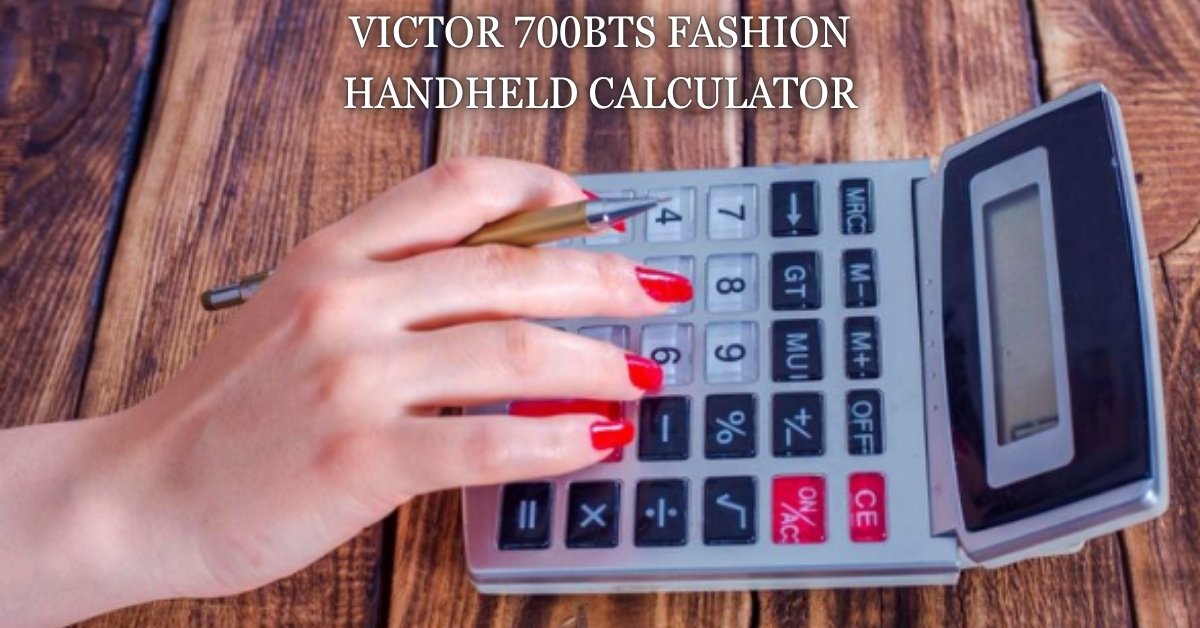
Victor 700BTS Fashion Handheld Calculator: Right Fit?

victor 700bts fashion handheld calculator

A basic school calculator sounds simple until you’re staring at a listing full of specs and no real context. This piece tells you exactly what the Victor 700BTS fashion handheld calculator does, who it actually suits, and where it falls short once math gets harder than arithmetic. You’ll walk away knowing whether it belongs in a third grader’s pencil case or a teenager’s backpack, and what the name on the box really means. Short Answer The Victor 700BTS fashion handheld calculator is an 8-digit basic calculator with percent, square root, and change sign functions, built for elementary and middle school arithmetic rather than algebra, trigonometry, or standardized test math. What This Calculator Actually Is Victor Technology sells the 700BTS as a compact, four-function-plus calculator with a large 8-digit LCD screen and 14mm display digits, which is noticeably bigger than the type on most pocket calculators twice its price. The housing is translucent plastic in colors like lime, blueberry, and cranberry, and that colorful, see-through shell is the entire reason “fashion” shows up in the product name. It runs on hybrid solar and battery power, uses a single AG10 button cell as backup, and includes an automatic shutoff to save that battery when nobody’s using it. Every listing across retailers repeats the same core functions: percent, change sign, square root, and three-key independent memory. That’s a real, if short, list. It’s not a scientific calculator and never claims to be one, so there’s no exponent key, no fraction mode, and no trigonometric functions anywhere on the keypad. Key Specs at a Glance Which Grade Levels It Actually Fits Retailers list this calculator for grade 3 and up, and that number lines up with what the functions can actually do. A child learning multiplication tables, basic percentages, or square roots for the first time gets everything they need here, and the oversized display makes it genuinely easier on younger eyes than a cramped scientific model. That’s a real advantage, not marketing filler, since plenty of kids struggle to read tiny calculator screens long before they struggle with the math itself. Where it stops working is the moment coursework moves into algebra with negative exponents, scientific notation, or graphing. None of the top listings mention this limitation directly, because they’re written to sell the product, not to steer a parent away from a mismatch. If a student needs a calculator for pre-algebra homework or beyond, this model will handle the arithmetic parts fine but leave them stuck the first time a problem calls for a function key that isn’t there. Where the Name Trips People Up Searches for this exact product routinely mix in confusion the listings never address, so it’s worth clearing up directly. “BTS” in the model number has nothing to do with the K-pop group, despite how often that acronym shows up elsewhere online; it’s simply Victor’s internal naming convention for this particular colorway line, the same way many office brands tack a short code onto a base model number. “Fashion” is doing similar work, describing the bright translucent housing rather than any wearable or style-industry angle. This mismatch between what a name sounds like and what it actually means is common with product model numbers, and it’s exactly the kind of gap a spec sheet never bothers to close. Once you know BTS refers to a color and finish variant rather than anything else, the rest of the listing makes a lot more sense, and you can stop wondering if you’re looking at the wrong product entirely. How It Stacks Up Against Other Victor Pocket Models Victor sells several pocket calculators built on a similar shell, and the differences matter more than they first appear. The Victor 900 uses a smartphone-inspired styling with a similar function set, while the 908TK and other multicolor packs swap the translucent housing for a more traditional finish at a comparable price point. None of them add scientific functions over the 700BTS, so switching models within Victor’s basic lineup is mostly a choice about color and grip rather than capability. That percent key is where this calculator earns its keep for everyday use, whether that’s a student checking a grade percentage or a parent splitting a bill. If you want to double check a percent calculation without digging the physical device out of a bag, a free percentage calculator online handles the same math instantly and shows the steps, which can help a student confirm they’re reading the calculator’s answer correctly in the first place. Price, Packs, and Where the Better Deal Sits Single units of the 700BTS typically run between six and eleven dollars depending on the retailer, while classroom-sized packs bring the per-unit price down noticeably. A five-pack lands around thirty three dollars, and ten-packs from office suppliers run roughly seventy seven to eighty six dollars, which works out to a similar per-unit cost either way. That pricing pattern tells you something useful: buying in bulk rarely saves much beyond convenience for teachers stocking a full classroom set, since the per-unit math barely moves. For a single household buying one calculator for one kid, the individual unit price is the only number that matters, and it sits solidly in impulse-purchase territory for back-to-school shopping. Anyone weighing a bigger multipack against several single units should compare current listed totals directly, since shipping fees and seller markups shift those numbers more than the base price does. Battery Life and the Solar Backup The AG10 backup battery only kicks in when there isn’t enough ambient light for the solar cell, which is standard behavior across most hybrid-powered calculators of this size and predates this specific model by decades. Solar-powered calculators first appeared commercially in the late 1970s and quickly became the industry default for basic models precisely because the low power draw of an LCD screen barely taxes a small solar cell. In practice, that means a student using this calculator mostly under classroom lighting or near a window will rarely, if ever, need … Read more

Legitnetworth.com: Net Worth Blog or Ad Marketplace?

legitnetworth.com

Type a domain name into a search bar right before trusting it with your attention, and you’ll usually run into two conflicting stories on the first page. A security scanner insists the site is probably fine, and a thin summary page says almost nothing real about what it actually publishes. Legitnetworth.com sits squarely in that gap, and this piece is built to close it. You’ll find out what the site actually publishes, who’s behind it, and where its celebrity net worth content holds up against where the newer material on its homepage doesn’t. By the end, you’ll know whether its numbers are worth citing and what else the domain is quietly being used for. Short Answer Legitnetworth.com is a real, actively updated blog that publishes celebrity and athlete net worth estimates, and independent scanners haven’t flagged it for malware or adult content. It also runs as a paid guest post marketplace, which is why sponsored, unrelated content now fills much of its homepage. What Legitnetworth.com Actually Is The site launched as a straightforward celebrity net worth blog, and its navigation menu still reflects that original purpose closely. Visitors can browse dedicated sections for actors, athletes, businessmen, entrepreneurs, internet stars, politicians, rappers, singers, and TV personalities, each broken into smaller subcategories like basketball, boxing, or CEOs. A typical net worth post follows the same shape every time. It opens with a short bio of the person, states an estimated dollar figure, and works through the career moves, endorsements, or business ventures that supposedly built that fortune. Recent examples cover figures like GloRilla, BigXthaPlug, and golfer Joel Dahmen, alongside older archived posts going back to at least 2022. The archive itself runs deep. The site’s main listing page alone spans more than 300 pages of published posts, which points to years of steady output rather than a thin site thrown together to chase a few keywords. That kind of volume is worth noting, since it’s the sort of detail a quick malware scan or a one-line trust score will never surface, even though it says more about the site’s real history than either one does. Checking the Trust Signals Before trusting any content site with your attention, it helps to check the basics rather than take a headline claim at face value. Legitnetworth.com clears most of the standard checks a careful reader or a security tool would run. What a Malware and Adult Content Scan Shows Independent scanning services that check sites for malicious code report that this domain most likely does not host malware, phishing scripts, or adult material. It runs on WordPress with a standard SEO plugin and caching setup, the same technology stack used by millions of legitimate blogs, not a stripped-down template built to harvest clicks and disappear. Domain reputation tools that guest post marketplaces rely on list its authority score somewhere in the high 50s, with different tools reporting figures between 56 and 59. That range points to a domain with real backlinks and history behind it, not a brand new site with no track record. The Ownership and Contact Details The footer links to About Us, Terms of Use, Privacy Policy, and Contact Us pages, all of which is basic but genuine legitimacy signaling that plenty of low-quality sites skip entirely. Dig into the actual contact email hidden behind the site’s spam protection, though, and it resolves to a personal-sounding Gmail address rather than one tied to the legitnetworth.com domain. That single detail doesn’t make the site fraudulent. Plenty of small publishers run on free email accounts. It does mean nobody should treat this as a heavily staffed newsroom with an editorial hierarchy behind it, and that context matters for how much weight to put on any single net worth figure it publishes. The Guest Post Business Hiding Behind the Net Worth Pages Here’s the detail that most quick trust checks completely miss. Legitnetworth.com is listed on multiple guest posting marketplaces as a site accepting paid articles and backlinks, with published pricing and editorial rules attached to the listing. One such listing spells out exactly what’s allowed. Titles and anchor text can’t include words like “Best,” “Review,” “Buy,” “Cheap,” or “Top,” footer and sidebar placements aren’t accepted, and homepage banner links require a minimum three-month commitment. That’s a fairly structured, professional-looking setup for buying visibility on the domain. This explains something that looks confusing at first glance. Scroll the current homepage and net worth pages sit next to posts about CBD products for stress, vape device reviews, emergency tree removal in Wisconsin, and account-based marketing strategy, topics that have nothing to do with celebrities or their finances. Those aren’t editorial mistakes. They’re paid placements running through the same guest post pipeline that any interested buyer can find and order from. None of this makes the celebrity content fake. Older net worth articles going back several years still read like the site’s actual core product. What’s changed is the balance, and a reader landing on the homepage in 2026 will see roughly as much sponsored, unrelated material as they will actual net worth journalism. This quiet shift from a single-topic blog into paid publishing inventory isn’t unique to this domain, either. We found much the same pattern behind an older technology blog that kept publishing long after its original niche narrowed, where genuine reporting now sits alongside content clearly bought and paid for. A domain with a few years of history and a decent authority score is valuable real estate, and plenty of site owners eventually decide to rent part of it out. The Assumption That Trips Most Readers Up About Legitnetworth.com Most people assume a domain called Legitnetworth.com is a single-purpose celebrity finance publication run by a dedicated editorial team, the way a magazine’s website would be. That assumption breaks down once you look at what’s actually publishing there today. The confusion happens because the branding never changed even after the business model shifted toward selling content placements. A domain that started as a niche … Read more